SFP28 vs. SFP+: A Complete Guide to Making the Right Choice
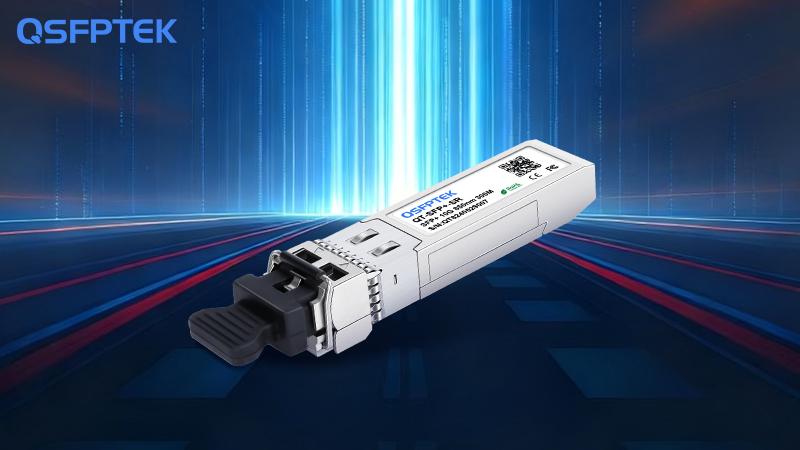
With the explosive growth of data traffic, choosing between SFP28 and SFP+ is crucial for modern networks. Understand which module best suits your needs.
In modern network infrastructure, especially in data center and cloud computing environments, the choice of optical modules is critical to ensuring optimal performance. Among numerous options, 10G SFP+ and 25G SFP28 stand out as popular solutions, but they each have different characteristics.
While these two modules have similar physical structures, they meet different requirements in terms of throughput, energy efficiency, and future compatibility. In this article, we will explore their technical differences, application areas, and the criteria to consider when making an informed choice.
Basics: SFP+ and SFP28
SFP+ (Small Form Factor Pluggable Enhanced) is an optical module widely used in 10G applications. It is an upgrade from the standard SFP, increasing throughput while maintaining a compact form factor. Due to its versatility and technological maturity, SFP+ has become a standard configuration in many network environments.
As its name suggests, SFP28 (Small Form Factor 28) is an upgrade from SFP+, designed to support speeds up to 25 Gbps. It was developed to meet the growing bandwidth demands of modern data centers while maintaining backward compatibility with existing infrastructure.
Basic Technical Differences
Although SFP+ and SFP28 have the same physical size, they differ significantly in technology, impacting their performance and respective application areas.
1. Data Rate
The most obvious difference lies in their data rates:
SFP+: Supports speeds up to 10 Gbps
SFP28: Supports speeds up to 25 Gbps
This improvement translates to a 2.5x increase in bandwidth, meeting the needs of modern data-intensive applications.
2. Compatibility and Interoperability
A common issue is compatibility between the two standards. Fortunately, the SFP28 design cleverly incorporates backward compatibility:
SFP28 modules can be plugged into SFP+ ports, but the transmission speed will be reduced to 10 Gbps.
SFP+ modules can typically also be plugged into SFP28 ports, provided the switch supports 10 Gbps transmission speeds.
This compatibility allows users to gradually upgrade to higher speeds without completely replacing their infrastructure.
3. Energy Consumption
Energy efficiency is a critical parameter, especially in high-density data centers. SFP28 typically offers higher energy efficiency per bit than SFP+. While the absolute power consumption may be slightly higher, the significantly higher throughput more than compensates for this difference, thereby reducing the cost per bit.
Applications and Use Cases
When to Choose SFP+?
SFP+ remains the ideal solution for the following scenarios:
Legendary 10GbE links
Enterprise networks where 10G bandwidth is sufficient for current needs
Budget-constrained environments
Existing infrastructure already optimized for 10G
When to Choose SFP28?
SFP28 is crucial in the following scenarios:
Modern data centers requiring 25G speeds
Uplinks between switches
Cloud computing and virtualization-intensive environments
Infrastructure preparing for 100G migration (via 4-channel 25G QSFP28 modules)
5G networks requiring higher bandwidth
Advantages of SFP28 in Network Evolution
One of the main advantages of SFP28 is its ability to serve as a cornerstone for network evolution to higher speeds. Here’s its role in network evolution strategies:
Transitioning from 10G to 25G
For enterprises already with 10G infrastructure, migrating to 25G via SFP28 is a natural and cost-effective evolution. Unlike directly upgrading to 40G or 100G, this transition significantly improves performance without requiring a complete overhaul of cabling or equipment.
The Path to 100G
SFP28 also plays a key role in 100G architectures. The QSFP28 module for 100G is essentially based on four aggregated 25G channels. Therefore, by deploying SFP28 infrastructure, enterprises naturally prepare for future migration to 100G.
Cost Optimization
While the initial cost of SFP28 modules is generally higher than that of SFP+ modules, their deployment can result in long-term cost savings due to the following reasons:
Reduced number of links required to achieve a given bandwidth
Higher energy efficiency per bit transmitted
More gradual scaling to higher speeds without requiring a complete infrastructure overhaul
Other Technology Decision Factors
Besides speed and compatibility considerations, other technology factors influence the choice between SFP+ and SFP28:
Signal Integrity
SFP28 typically employs advanced signal processing techniques to maintain data integrity at higher speeds. These improvements ensure reliable transmission at 25 Gbps without signal attenuation.
Transmission Distance
The two module types support different transmission distances depending on their specific design (SR for short distances, LR for long distances). For example, SFP+ SR modules typically support transmission distances up to 300 meters on OM4 fiber, while SFP28 SR modules can only support transmission distances up to 100 meters on the same fiber.
DAC and AOC Cable Support
Both standards support short-distance connections using DAC (Direct Connector) and AOC (Active Optical Fiber), but the length limitations differ slightly.
Future Outlook
The optical module field is constantly evolving, moving beyond SFP28 to include standards such as QSFP-DD (Dual Density) and OSFP to support speeds of 400G and above.
However, SFP28 is expected to maintain its position as a balanced solution at 25G speeds for the next few years, especially in scenarios where port density is not a primary limiting factor.
Conclusion: How to Make the Right Choice
The choice between SFP+ and SFP28 depends primarily on your current and future bandwidth needs, existing infrastructure, and your development roadmap.
Please select SFP+ if you meet the following criteria:
Your bandwidth requirements are no more than 10G.
You already have 10G infrastructure and have no short-term upgrade plans.
Your current budget takes precedence over future investments.
Please select SFP28 if you meet the following criteria:
You plan to upgrade to 25G or 100G.
You are deploying new infrastructure and want to anticipate future needs.
Your applications require higher bandwidth but you don’t want a radical technological overhaul.
You want to optimize energy efficiency per bit transmission.
In today’s rapidly evolving technological landscape, SFP28 strikes a reasonable balance between performance, cost, and future scalability, making it particularly suitable for enterprises planning to expand their networks in the medium to long term.


