High-Performance Embedded Design: Deploying the STM32F405RGT6 and Navigating Global Semiconductor Procurement
Industrial automation, motor drives, and advanced robotics require exceptional computational responsiveness at the hardware level. Modern embedded systems must execute complex mathematical algorithms in real time while maintaining signal stability across changing electrical environments.
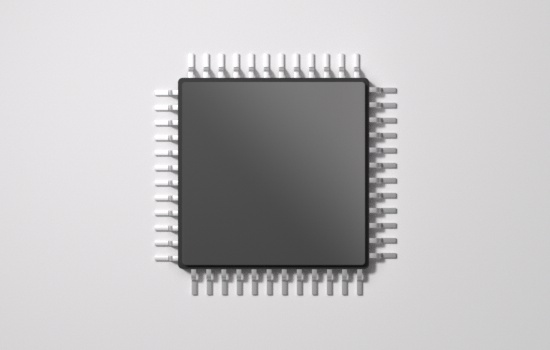
Deploying an STMicroelectronics high-performance 32-bit microcontroller (MCU) allows engineering teams to integrate signal conversion, digital filtering, and motor control into a unified processing platform. This integration can simplify circuit design and reduce communication overhead between external components.
However, securing consistent silicon availability remains a critical priority for original equipment manufacturers. Partnering with a vetted MCU supplier early in the prototyping phase ensures that component selections align with long-term production feasibility and volume availability.
Edge processing nodes now perform tasks previously reserved for centralized industrial servers. These systems continuously collect multi-channel sensor telemetry, run local diagnostic algorithms, and drive complex actuators with microsecond-level timing precision.
Architectural Demands of Modern Embedded Computing
Such rigorous processing environments demand dedicated arithmetic hardware, deterministic interrupt handling, and flexible communication peripherals. Without hardware-level floating-point acceleration, complex control loops can saturate the central processor and create dangerous response lags.
System architects must also manage strict thermal dissipation boundaries and component density requirements. Compact automation enclosures frequently restrict ambient airflow, making energy-efficient silicon essential to prevent localized thermal accumulation and long-term silicon wear.
Furthermore, electromagnetic noise generated by high-power industrial switching circuits poses constant interference risks. Microcontrollers deployed near high-current inverters require robust internal filtering, dedicated ground planes, and resilient input-output stages to maintain operational stability.
STMicroelectronics High-Performance 32-Bit Microcontroller (MCU) Integration
Engineers frequently implement the STM32F405RGT6 to fulfill these demanding system requirements. This component features an ARM Cortex-M4 32-bit core operating at frequencies up to 168 MHz, delivering up to 210 DMIPS of computational throughput.
The device integrates a single-precision hardware floating-point unit and dedicated digital signal processing instructions. These hardware features accelerate vector math calculations, making the architecture well-suited for high-precision field-oriented motor control systems.
Memory integration on the STM32F405RGT6 includes 1 megabyte of on-chip flash memory alongside 196 kilobytes of system RAM. This storage pool incorporates 64 kilobytes of core coupled memory data RAM to facilitate rapid critical-routine execution.
STMicroelectronics incorporates its proprietary adaptive real-time memory accelerator, known as the ART Accelerator. The ART Accelerator uses an instruction prefetch queue and branch cache to provide Flash execution performance equivalent to zero wait states at CPU frequencies up to 168 MHz.
System connectivity is supported through a comprehensive peripheral suite, including multiple SPI, I2C, USART, and CAN interfaces. A dedicated USB 2.0 on-the-go controller supports flexible communication modes for firmware upgrades and real-time field diagnostics.
To offload central processing burdens, the architecture incorporates a 16-stream general-purpose direct memory access controller. Equipped with dedicated FIFOs and burst support, this subsystem transfers data between peripherals and memories without processor intervention.
Analog capabilities feature three 12-bit analog-to-digital converters offering up to 24 channels and two 12-bit digital-to-analog converters. These converters enable rapid acquisition of phase currents, sensor voltages, and system temperatures without external conversion silicon.
Timing resources include up to seventeen hardware timers, featuring two 32-bit timers and specialized PWM timers. These units provide dead-time generation and complementary outputs, which are essential for driving power switches in three-phase brushless motor systems.
The component is packaged in a 64-pin low-profile quad flat package measuring 10 mm by 10 mm. This surface-mount package balances compact size with accessible pin pitch, facilitating automated surface mounting and clean routing on four-layer circuit boards.
Operating reliably across an industrial temperature range from -40°C to +85°C, the device tolerates extreme thermal shifts. Its wide supply voltage envelope from 1.8 volts to 3.6 volts accommodates varied battery and regulated DC power configurations.
Semiconductor Sourcing and Supply Chain Resilience
Electronics manufacturing continues to face volatile lead times and recurring supply imbalances. Rapid technological advancements across industrial sectors create uneven demand cycles that can quickly drain distributor inventory and stall manufacturing lines.
Selecting an experienced MCU supplier helps procurement departments forecast manufacturing disruptions and navigate lead-time fluctuations. Close collaboration provides early visibility into component allocation cycles, protecting critical assembly schedules from costly factory downtime.
To navigate complex component cycles, Unibetter distributes a wide range of electronic components across industrial markets. Maintaining broad channel access enables equipment manufacturers to stabilize inventory levels during sudden market shifts and tight allocation periods.
Procurement teams face operational risks when sourcing through unvetted open-market channels. Counterfeit microcontrollers, remarked older silicon revisions, and improperly stored moisture-sensitive devices can lead to intermittent field failures and expensive warranty claims.
Embedded hardware demands rigorous inbound quality control. Every batch of integrated circuits must undergo thorough visual inspection, top-mark verification, and packaging checks to ensure complete compliance with original manufacturer technical specifications.
Traceability documentation, compliance certificates, and reliable lot code tracking serve as essential procurement pillars. Maintaining unbroken supply records ensures that every installed component performs predictably throughout its operational lifecycle.
Selecting an Authorized MCU Supplier for Enterprise Systems
When incorporating an STMicroelectronics high-performance 32-bit microcontroller (MCU) into mission-critical hardware, authenticated sourcing ensures predictable electrical behavior. Verified silicon safeguards timing parameters, conversion accuracy, and flash retention over decades of continuous operation.
Specifically, Unibetter sources and procures electronic components from franchised sources to guarantee 100% authentic, quality-assured and brand-new electronic components. This disciplined sourcing philosophy protects sensitive automation systems from substandard, refurbished, or unverified electronic parts.
Strategic component distributors also offer vital obsolescence tracking, alerting engineers when specific part numbers approach end-of-life status. Proactive notification allows development teams to execute redesigns or lifetime buys before components become unavailable.
Conclusion
Deploying microcontrollers like the STM32F405RGT6 enables embedded designers to achieve exceptional computing power in compact form factors. Maximizing the lifespan and reliability of these advanced systems requires equal discipline across hardware engineering and procurement.
Through this disciplined approach, Unibetter empowers engineering teams to scale next-generation hardware seamlessly. Aligning robust component selection with trusted franchised sourcing pathways ensures that enterprise embedded infrastructure delivers reliable, uninterrupted performance in demanding field applications.


